
Most aftermarket companies believe they are in control of their business.
They have data.
They have systems.
They have KPIs.
But they all measure the same thing: what has already happened.
Sales.
Orders.
Revenue.
And that creates a false sense of control.
What’s really happening
Every day, your company receives real demand:
- web searches
- counter requests
- phone calls
- B2B orders
That demand tests something critical: your actual ability to respond
But there’s a question almost no one can answer:
Were you prepared to respond at the moment that demand occurred?

Having the product doesn’t mean you can sell it
A product may exist in your catalog…
but not be findable.
It may be in your range…
but not in stock at that moment.
It may be available…
but not be competitive.
And then something critical happens: demand exists, but your company cannot respond
And that doesn’t show up in any traditional KPI.
The problem is not demand
Demand is there.
And in many cases, larger than you think.
The real problem is something else: your actual ability to respond to that demand
And most critically, you don’t know what share of that demand you can actually respond to correctly.
You’re making decisions with incomplete information
When you only analyze sales:
- you don’t see what you couldn’t fulfill
- you don’t detect patterns of unmet demand
- you don’t understand where your structure is failing
- you can’t prioritize correctly
You’re making decisions based on part of the market.
Not the real market.
A shift in perspective
For the first time, it’s possible to analyze demand as it actually happens:
- multi-channel
- aggregated under real market logic (at product level)
- independently of whether it converts into a sale
And with that, answer a key question: what share of demand you can respond to correctly… and what share you can’t
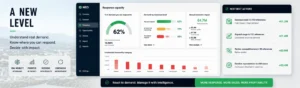
That’s what defines your demand response capacity.
What you don’t measure, you can’t improve
You can optimize stock.
You can expand your range.
You can negotiate pricing.
But if you don’t know where you’re not prepared to respond, everything becomes intuition.
Measuring your demand response capacity:
- shows where to act
- prioritizes by impact
- turns demand into a decision driver
The difference
For years, the aftermarket has made decisions based on what sells.
Today, it’s possible to understand what share of demand can actually be fulfilled.
If you want to understand how this applies to your company, you can see a real case in 20 minutes.
By Joan Cabós
CEO & founder